
Steve Sargeant
Any products or markets


Diploma was easily the business I felt most comfortable with – for myself, for the business and for my employees.

From day one they made it very clear that they wanted to come in to Peerless and let us do what we've done for so many years. If it's not broke, don't fix it. But, improve and support our efforts in growing with the company in the years to come.


Diploma provided complete transparency throughout the process. Negotiations were fair and their approach gave me the sense of a very caring culture. If you're considering an exit strategy for you, your family or whatever it may be Diploma is one of those unique businesses that doesn't come across your desk very often. I think Diploma is a fantastic fit to build on your legacy.


Diploma was the right fit for us. We felt that it was a longer-term proposition which would culturally fit better for VSP and our employees.


The entire Diploma team has honoured its commitment by doing everything it said it would. This has been critical in maintaining the trust and loyalty of our customers, our vendors and, most importantly, our employees.


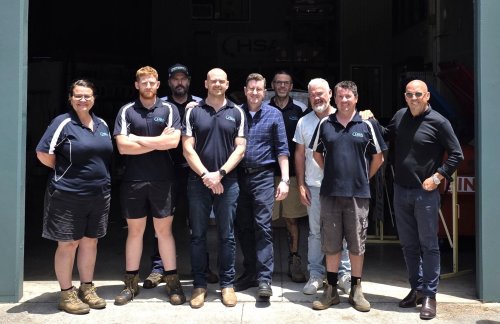
I'm surrounded by an A-team. Starting off in my garage, now I can proudly say that we have offices in Brisbane, Perth, Darwin and Sydney. We're part of a bigger family now.


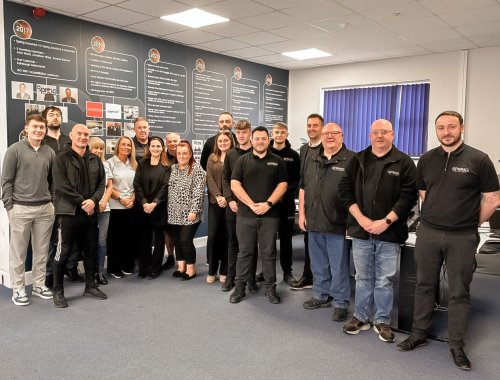
They wanted to let the employees know that they were safe, and that they would have a great career with Diploma.
Diploma invests for the long term. The decentralised model is the same as ours, giving management teams the autonomy to make decisions and run their businesses.

I am very proud to leave DICSA to a group like Diploma PLC, with a great leadership that will guarantee a successful future for us all.


We’re industry experts who know your markets and share your passion for what you’ve built.

As experienced acquirers with cash available, we can complete transactions efficiently and with minimal disruption.

We structure deals that work for you, whether you’re looking to step back gradually or stay involved in the next phase of growth.

Your business keeps its name, culture and identity. We back your management team to keep running the business – with the autonomy, resources and support to take it even further.

We invest in talent, technology and facilities to help your business thrive well into the future.

With Diploma, you’re not selling to a private equity firm or a corporate consolidator – you’re joining a group of successful, entrepreneurial businesses that continue to grow independently, supported by a trusted and experienced central team.
50+
acquisitions since 2019


Any products or markets

Seals, gaskets, fluid power or anything similar

Wire and cable, interconnect, fasteners, adhesives, automation or anything similar

Life Sciences, Healthcare

Seals, gaskets, fluid power or anything similar

Wire and cable, interconnect, fasteners, adhesives, automation or anything similar

Seals, gaskets, fluid power, wire and cable, interconnect, fasteners, adhesives, automation or anything similar

Seals, gaskets, fluid power, wire and cable, interconnect, fasteners, adhesives, automation or anything similar

Seals, gaskets, fluid power

Adhesives
Sale processes can differ slightly, but the majority of the steps and principles are consistent most times:
Have an early discussion with a potential buyer to start building a trusted relationship, spend some time with each other, get to know each other. Transactions happen between people, not just on paper or in spreadsheets. This is an important first step that many buyers and sellers skip.
Sign a confidentiality agreement to give comfort that your information will not be misused.
Share some information with the potential buyer to enable them to assess the attractiveness and value of your business to them.
Seller and prospective buyer agree the terms of a non-binding offer, subject to due diligence, for your business.
A period of due diligence starts, generally lasting 4-6 weeks, where the buyer and its advisers will ask for considerable information and lots of follow-up questions on commercial, financial, tax, legal and IT matters. This is a challenging period for the seller and requires hard work, but we try to make it as easy as possible.
As due diligence progresses, we draft and negotiate a purchase agreement, which will be the legally-binding document that governs the transaction. Both buyer and seller will need expert advice from a specialist acquisitions lawyer to guide them through this step.
Then we sign and close the transaction, communicate to colleagues, customers and suppliers and continue growing the business.
This can vary significantly, from a few months to several years! It depends on the preparedness of the owner to sell, both emotionally and practically (e.g. what data is available to share with a buyer), as well as many other factors.
We can move fast when that is the preference, but can also be patient if an owner needs more time to prepare.
Good question! It certainly requires a lot of work from the seller, their management team and their advisers. There is considerable information to provide across several topics (commercial, legal, financial, tax, IT, environmental, employment) and follow-up questions. We try to make it as smooth and straightforward as possible. We aim to be pragmatic in our requests and respectful of your time by focusing on what truly matters and avoiding non-essential asks. While diligence is a necessary part of any transaction, most sellers find that with clear expectations and good communication (which we prioritise), the process with us is manageable, and ultimately worthwhile! And ideally, by selling to a strategic long-term owner like Diploma, you’ll only have to go through it once.
Thankfully not – despite being a fairly large company, we are, by design, very lean and agile – we make decisions quickly throughout the process, and make sure we don’t waste anyone’s time.
Most sellers feel this way and we understand and respect this completely. Confidentiality is incredibly important to us too. As a publicly listed company we cannot afford to have leaks, and we are very accustomed to dealing with sensitive information (as are our advisors). We only have a tight circle of colleagues involved in each transaction, and would never discuss potential transactions with a business’s customers, suppliers or colleagues without the owner’s express permission. This would be governed by a confidentiality agreement that we would sign at the start of the process.
We use a number of methods to value businesses, based on their growth prospects, profitability and cash generation over the coming years. We pay fair value for the businesses we acquire – if we didn’t, we wouldn’t have successfully acquired so many companies over the past few years. It’s important to us that each acquisition is a win-win for us as the buyer and the seller too.
We consider strong customer relationships, a great reputation and technical expertise as prerequisites for a good value-add distributor. These are aspects that allow your business to generate its growth and profitability, so those intangibles are included within that analysis.
We flex our approach to deal structure based on the specific circumstances of a company, who its shareholders are, whether they’re still involved in running the business, what the expected growth is, and what the right incentives are going forward. Every situation is different.
We are flexible. Diploma has completed acquisitions ranging from small, local founder-led businesses to larger, more established international platforms. We typically look for companies with strong market positions, attractive margins, and a clear path for long-term growth regardless of size.
Diploma is a decentralised group – that means we have a very small support-based HQ, and empower our management teams to drive their commercial strategies as they see fit for their local markets. We onboard new businesses rather than integrating them – they keep their management and people, maintain their heritage, culture and core values.
This is really important to us – we are very conscious of not damaging any of the value we acquire, which means maintaining strengths, and, where sensible, building on them. A company should not lose its identity by joining Diploma, neither from a brand nor a cultural perspective; it’s business as usual.
That’s an important consideration for any business owner; the best thing to do is speak with us, spend time with us and see what you think. We are also happy to introduce you to people who have previously sold their business to Diploma and get their views/experiences.
We buy businesses to own and grow them, not to sell them. That means we don’t operate on a 3–5-year fund cycle or require aggressive cost cutting to hit short-term return targets. Instead, we focus on the long-term, supporting sustainable growth.
When we come towards the end of the due diligence process, we turn our attention to the onboarding plan – what are the key areas that need to be addressed after the acquisition has completed, and within what timeframe? We look at the capabilities within the acquired business and identify where we might need to support, whether that’s in finance, HR, health and safety, legal, etc.
On the personal aspect, you should have regular conversations with your relevant Sector CEO and make sure they are clear on how they can support you – they are all very experienced in acquisitions and understand the emotional journey of selling a business.
For you, it completely depends on how involved you are in the business today. Our main principle is that management of the business should continue as is post-acquisition. Diploma is a very lean group; we rely on existing leadership to continue driving the business forward.
The handover period depends on the needs of the business we are acquiring, so that nothing falls through the cracks with customers, suppliers and colleagues. We must ensure complete continuity; business as usual for those key stakeholders.
It depends, every situation is different. There are some areas, such as health and safety and financial reporting, where we need to ensure minimum standards are met (and we will help you implement any required changes), but beyond that we are guided by you – where you feel you need more support from the group (perhaps in HR matters, IT, helping with shared suppliers, looking for cross-sell opportunities), or perhaps you don’t need any support, which is also fine.
There is a natural alignment – we are all seeking to grow our businesses, serve our customers and look after our people.
The videos and quotes above feature former owners talking about their experience of selling to Diploma and how we have done what we said we would do. We would be happy to introduce you to people who have previously sold their business to Diploma so you can hear from them directly.
If your current ERP system is doing the job it needs for your business and is still supported, that works for us too and doesn’t need to be changed.
No, this is not how Diploma operates. All our businesses have their own facilities, we do not run from one big central warehouse. There is no Diploma warehouse! You would stay in your existing premises.
We look to make returns on our investment by driving revenue growth rather than cutting costs. We will make investments as required to achieve that growth.

Discover why business owners choose Diploma PLC as their preferred and trusted buyer.
Read article
Bill Way and Don Russo discuss how Peerless Aerospace partnered with Diploma to strengthen and expand its business delivery.
Read article
The leaders of some of Diploma’s businesses talk about the support and security they receive by being part of the Diploma Group.
Read article
Learn more about how Diploma’s decentralised business model offers businesses the freedom and resources to deliver sustainable growth.
Read article
Peerless Aerospace’s value-add offering and growth potential enhance Diploma’s capabilities and market presence in the aerospace sector.
Read article